9 articles in this series
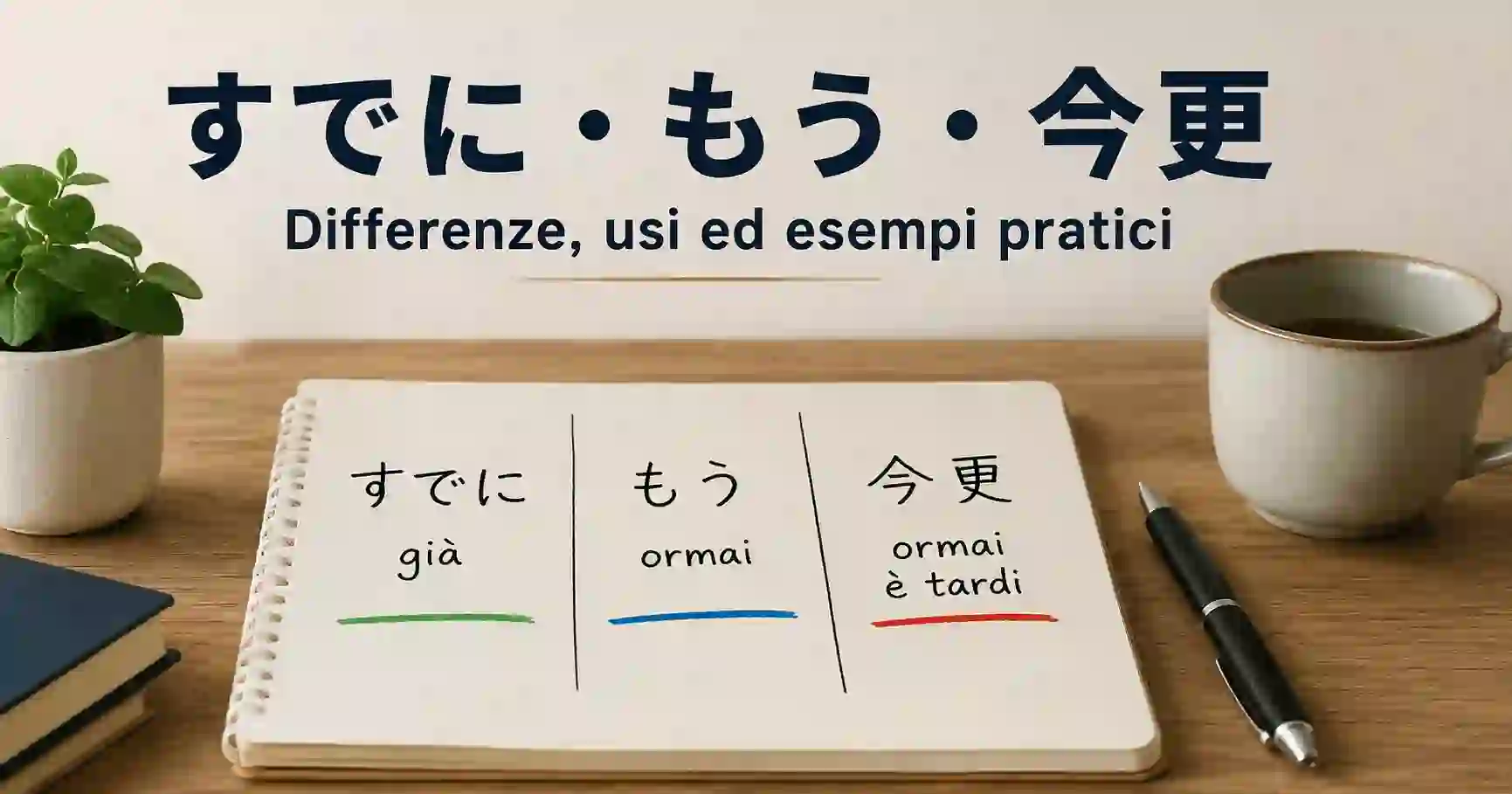
Learn the differences between すでに, もう, and 今更 in modern Japanese. Understand their meanings, usage, nuances, and when to use each through detailed explanations and practical examples.
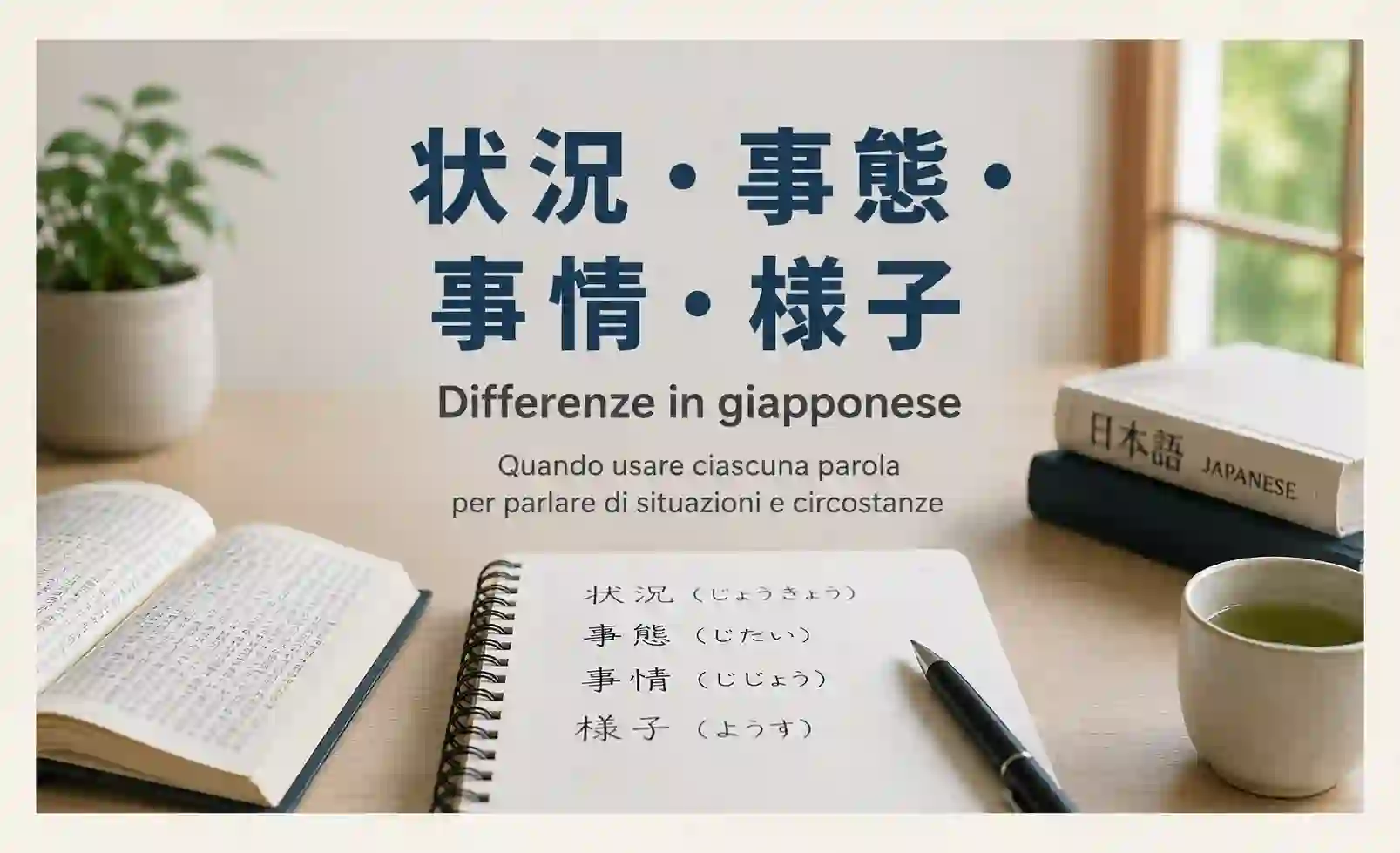
What is the difference between 状況, 事態, 事情, and 様子? A comprehensive study of the main Japanese words used to express situation, circumstances, state of affairs, and context, including kanji analysis, semantic nuances, register, and practical examples.
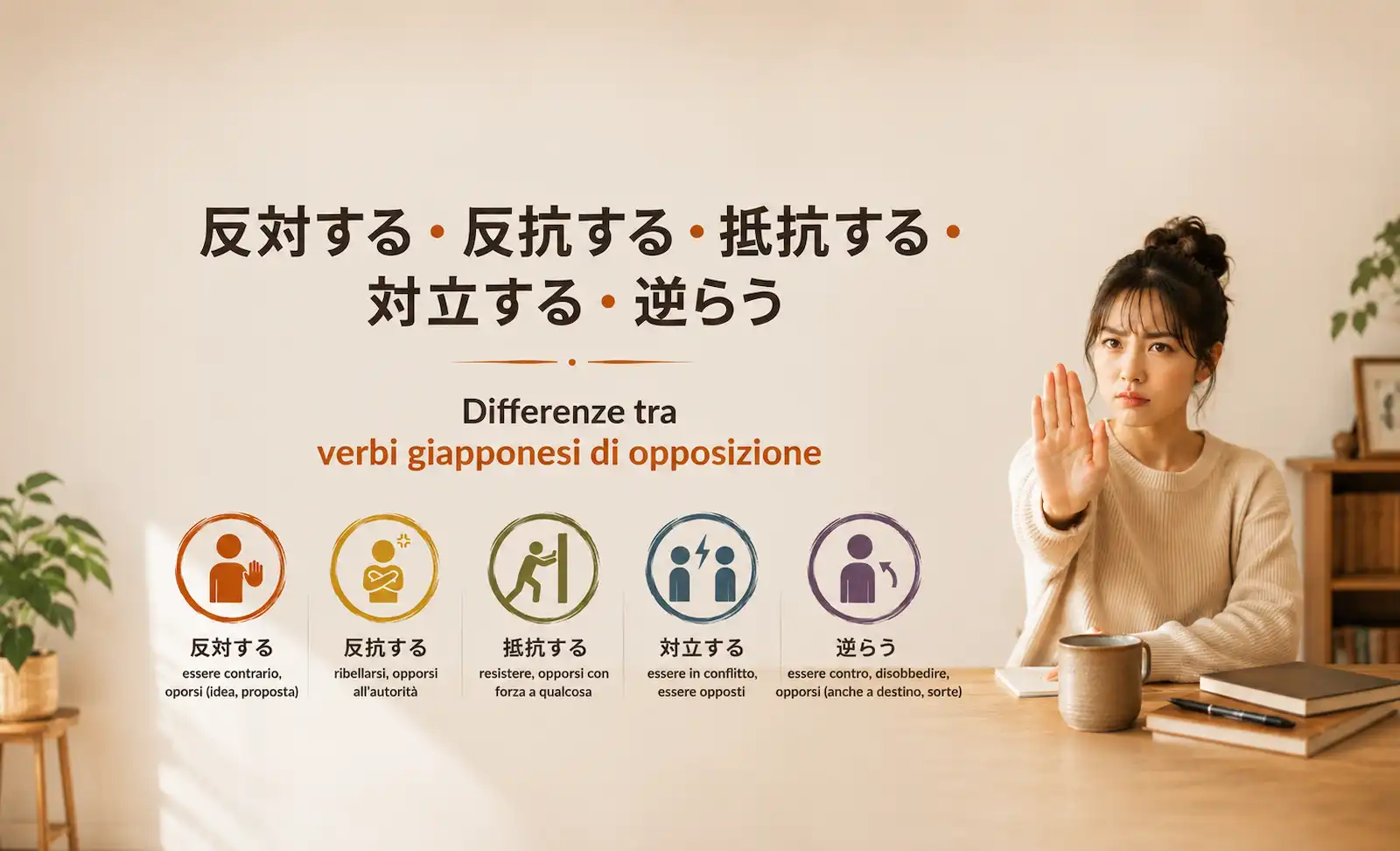
What is the difference between 反対する, 反抗する, 抵抗する, 対立する, and 逆らう? An analysis of the kanji, precise meanings, nuances, and usage contexts with examples. A guide to Japanese verbs of opposition (JLPT N3–N2).
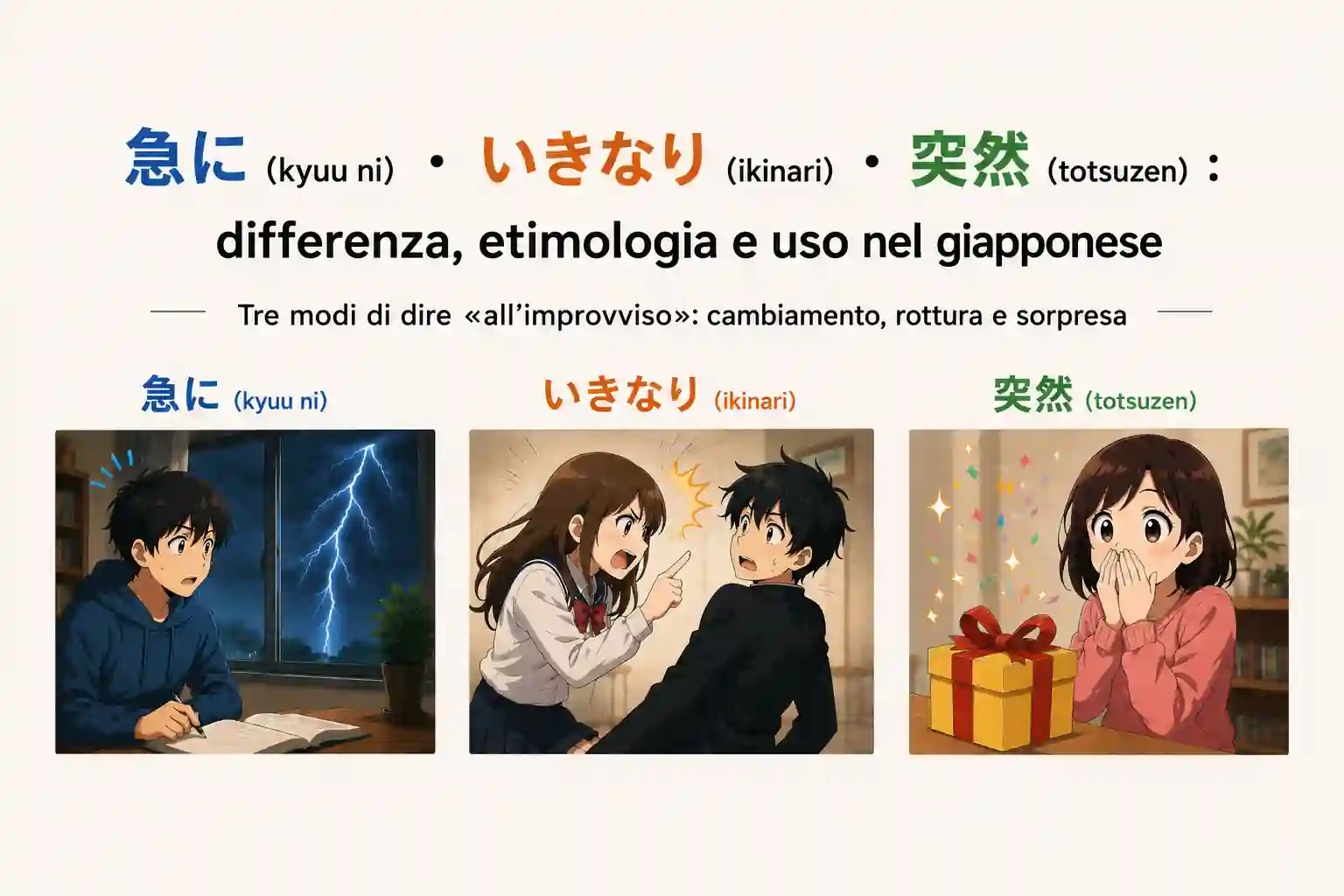
What is the difference between 急に (kyuu ni), いきなり (ikinari), and 突然 (totsuzen)? Learn how their meanings, usage, nuances, register, and etymologies differ.
What is the difference between 気分 (kibun), 調子 (choushi), 体調 (taichou), and 具合 (guai)? Learn what each one means, how they differ, and when to use them in Japanese.
What is the difference between 大半 (taihan), 大部分 (daibubun), and ほとんど (hotondo)? A detailed analysis of meaning, semantic nuances, usage contexts, and selection criteria in modern Japanese (JLPT N3).
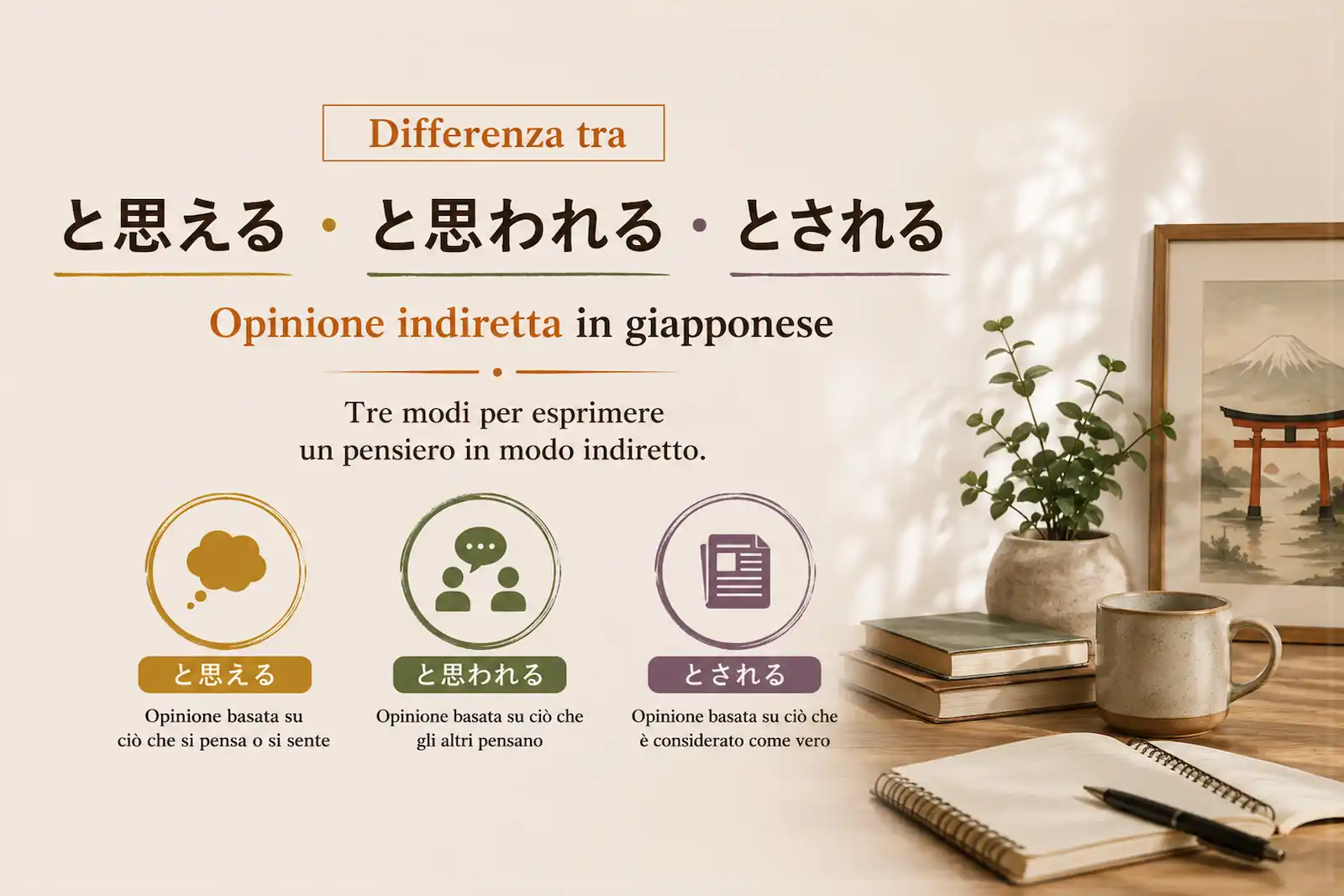
What is the difference between と思える, と思われる, and とされる? An in-depth comparison of meaning, usage, degree of subjectivity, and level of formality when expressing indirect opinions in Japanese (JLPT N2).
What is the difference between 空気 (kuuki), 環境 (kankyou), and 雰囲気 (fun'iki)? Learn what each word means, how they differ, and when to use each one in Japanese.
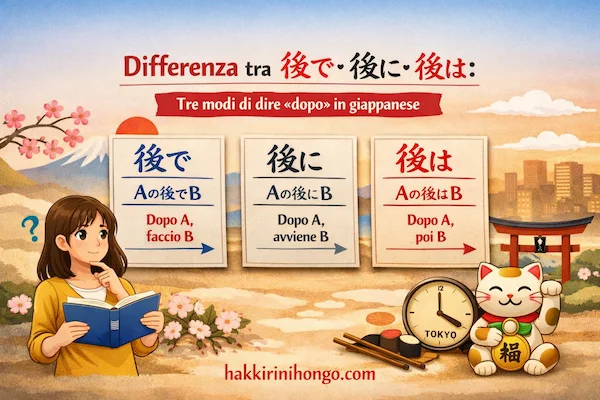
What is the difference between 後で (ato de), 後に (ato ni), and 後は (ato wa)? Learn their meanings, grammar, usage, and nuances through clear examples of “after” in Japanese.